Scott and I conduct an after action review of yesterday’s election in Virginia, New Jersey, New York, and California. Why did Democrats more or less run the table, in some cases by flipping districts Trump won last year?
You can find this and other FBL content on YouTube, Spotify, TikTok, and Instagram. Check us out, subscribe, like, comment, share, and let us know what you think.
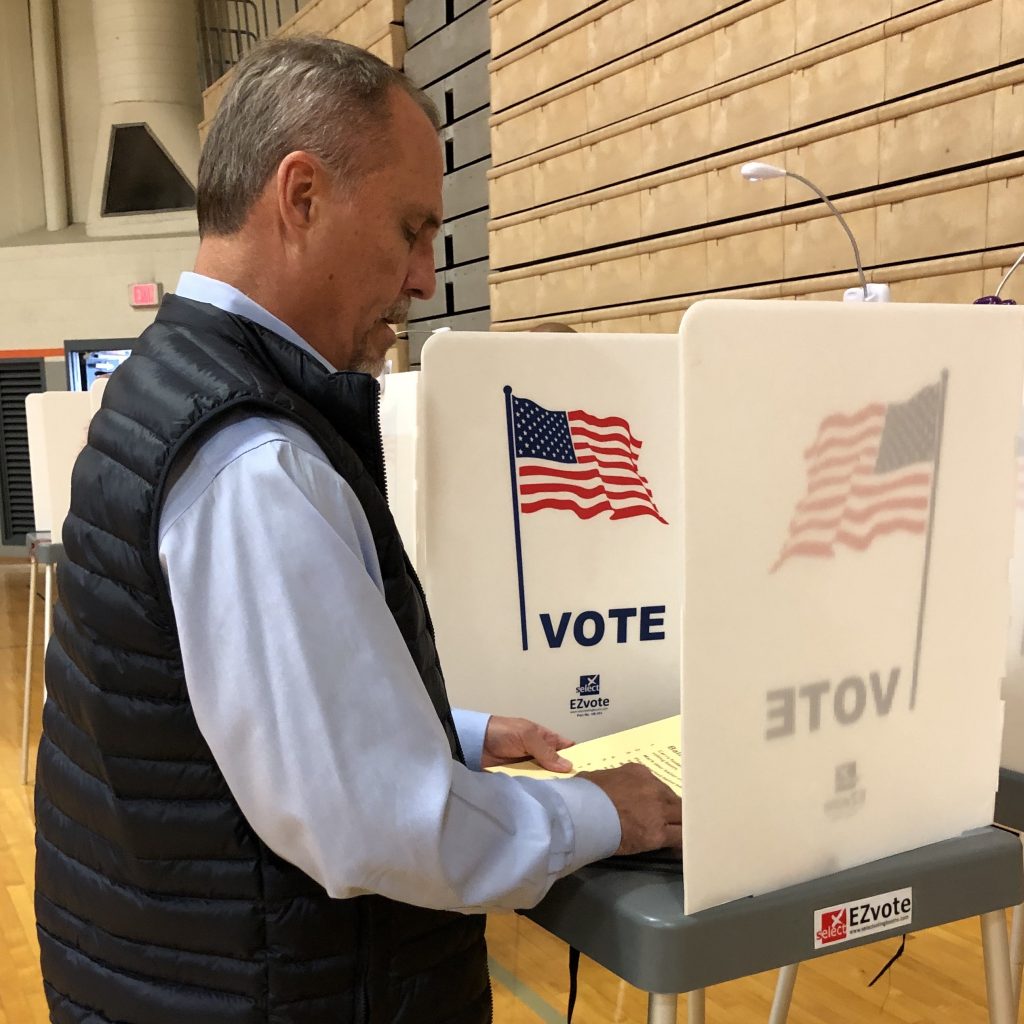
Voting in Person, 2019 Photo Credit: R. Stanton Scott
An authoritarian figure who has joked about being President for life runs the Federal Government during a pandemic that could literally kill millions of Americans and disrupt society for months. States are postponing primary elections and struggling to figure out how voters can cast ballots while keeping social distancing. Understandably, some people worry that Donald Trump might take advantage of the crisis to stay in power.
Lots of journalists have written about this, including Evan Halper in the LA Times, Blake Rutherford for The Hill, and Chris Cillizza for CNN. The general assessment boils down to “Trump may be desperate with the economy in the tank but has no power to postpone elections. His term ends on 20 January 2021 even if he could, and the Presidential Succession Act kicks in if he isn’t reelected or replaced through a Constitutional election before that time.”
These discussions focus narrowly on two questions: whether States could physically hold elections during a pandemic using modern systems and what would happen if they couldn’t. Most agree that elections can take place if state legislatures hurry up and figure out how to use expanded absentee voting, other voting by mail systems, or even the internet. They also think that if for some reason elections cannot be held, someone other than Trump would take power based on existing statute.
What none of these articles mention is the Electoral College and the role of state legislatures in choosing these Electors. This is the group that actually elects the President, as we found out the hard way in 2016. These days voters choose these Electors by casting votes at polling stations or by mail because state legislatures want it that way – this is not a Constitutional requirement. This means that elections for President and Vice President can take place as long as state legislatures can meet and choose Electors before Election Day.
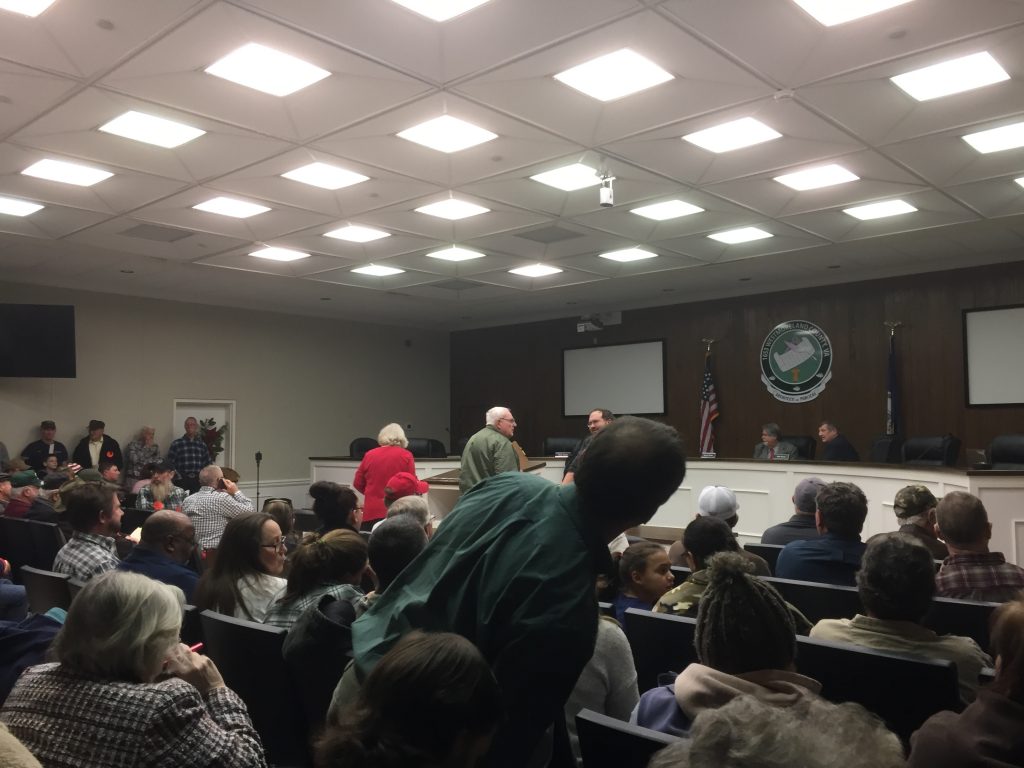
So conservatives who complain the loudest about “sanctuary cities” when it comes to immigration seem to be lining up to support “Second Amendment Sanctuaries” now that Democrats control the General Assembly. Yesterday I saw this first-hand at the Hanover and Westmoreland County Board of Supervisors meetings. Both Boards passed resolutions objecting to gun control laws that has not yet passed the General Assembly on the assumption they will infringe on Second Amendment rights.
It appears that guns and gun control could become a hot issue in next year’s state level elections here in Virginia. Attorney General Mark Herring started the hue and cry when he ended concealed carry permit reciprocity with 25 states on the grounds that they don’t meet Virginia standards. Gun rights activists objected one the grounds that it would hurt tourism and that no one can point out a case where someone from a state with lower standards had committed a crime in Virginia. One blogger called it “slavery.” They complained that Herring just wanted to go around the General Assembly to achieve a liberal result using an executive action.
But Mr. Cannon spoke more generally about the issue. In the end, allowing legislators to draw their own electoral districts allows them to choose the voters – and often their opponents. It amounts to an excellent system for incumbent protection. Continue reading →