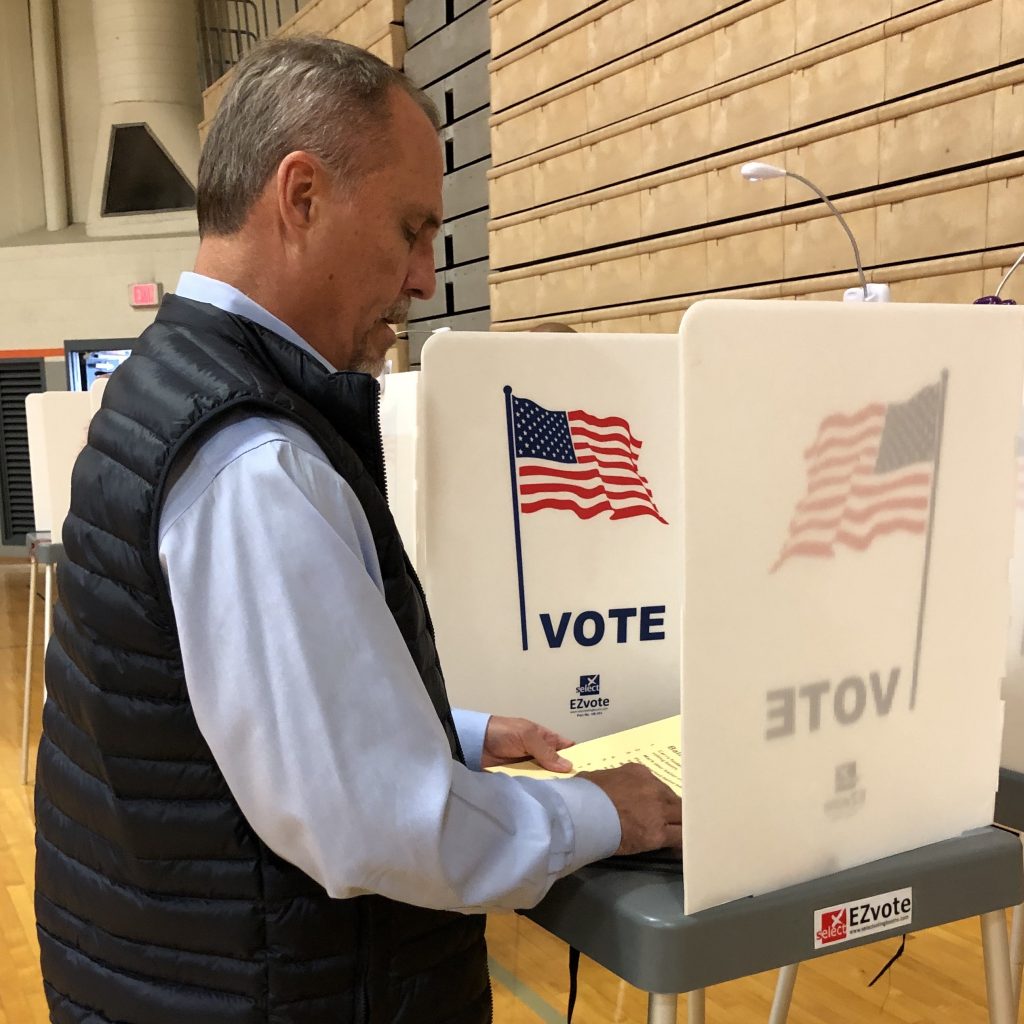
On April 10, 2025, the House of Representatives passed H. R. 22, also known as the SAVE Act. Under current election law, people registering to vote must attest/affirm that they are US citizens, under penalty of perjury, as part of the registration process. This legislation changes that law to require that people provide documentary evidence of citizenship instead, and defines what documentary proof is sufficient.
MAGA voters believe this is necessary because they are convinced that millions of non-citizens, including undocumented immigrants, swing elections against them by voting illegally. They have no evidence for this, and in fact the data shows that the type of voter fraud this legislation would stop is very rare and has never actually changed the results of an election.
Republicans in Congress passed it because their core constituency supports it, whether or not it is necessary. Many also support it because it would create a new obstacle to voting, making exercise of the franchise more difficult, and they think this will affect liberal voter turnout more than it will conservative voter turnout.
This essay outlines the very simple provisions of this bill and their potential impacts, including the new obstacles to voting it creates, and the increased costs of managing elections. Scott and I discussed election security in more detail during the last three episodes of Two Crusty Old Combat Soldiers with a Microphone.
Section 1 simply titles H. R. 22 as the “Safeguard American Voter Eligibility Act” or “SAVE Act.”
Section 2 defines the various forms of documentation sufficient to demonstrate citizenship for the purposes of registering to vote.
- A form of identification consistent with the REAL ID Act of 2005 (e.g., a driver’s license that shows citizenship because proof of citizenship was required for issuance).
- A valid US Passport.
- An official US military identification card together with a military record that shows a place of birth in the US.
- A valid government-issued ID card (Federal, State, or Tribal) showing that the applicant’s place of birth was in the US.
- A valid government issued photo identification card presented with one or more of the following:A certified birth certificate issued by a State, local government of a State, or Tribal government where the applicant was born that was filed with the office keeping vital records in the State, includes the full name, date, and place of birth of the applicant, lists the names of both parents, has the signature of an official authorized to sign birth certificates on behalf of the issuing government, shows the date the certificate was filed with the vital records office, and shows the seal of the issuing State or other government agency.
- An extract from a US hospital record of birth created at the time of birth with shows a place of birth in the US.A final adoption decree showing the applicant’s name and a place of birth in the US.A Consular Report of Birth Abroad or a certification of the applicant’s Report of Birth Abroad issued by the Secretary of State.A Naturalization Certificate or Certificate of Citizenship issued by the Secretary of Homeland Security or other document issued by the Federal government pursuant to the Immigration and Naturalization Act.
- An American Indian Card issued by the Department of Homeland Security with the classification “KIC.”
Note that a birth certificate alone is not sufficient without a valid government-issued ID card. This is the source of concern that people who took their spouses name upon marriage might have an issue with voter registration because the birth certificate will not match the government ID card. Since conservative women are both more likely to marry young and more likely to take the husband’s name, this could actually affect Republican voters more than it affects liberals.
More generally, despite conservative talking points around “you have to have an ID to buy beer,” government IDs are not so ubiquitous as they think. And while widely available, they also carry a cost in money and time, and though this is not a high cost it does place a barrier between voters and the voting booth.
Birth certificates are another matter. Many people (the homeless, many poor people, more likely in rural areas) do not have a copy of their certificate in a file drawer somewhere. Getting a copy may not be a simple matter for some people, especially older folks who were not born in a hospital and whose parents simple never did the paperwork – not an uncommon oversight in rural America before the 1960s. Note that not everyone has easy internet access or even a telephone, again more likely in rural areas. The Act does require acceptance of alternatives, but this is a real issue and it will make registration so difficult that many will simply pass. I actually think this is another provision that could backfire, since affluent people with college degrees are more likely to have access to these documents than poor people, including poor rural whites.
Section 3 requires applicants for voter registration to present documentary proof of US citizenship under all methods of voter registration.
- Voter registration with driver’s license application:
- Amends the voter application form to note the requirement to demonstrate citizenship.
- Adds language authorizing use of information provided on the form in a criminal or immigration proceeding.
- Voter registration by mail:
- Requires election officials to make sure residents are aware of the citizenship documentation requirement.
- Requires first-time voters who registered by mail (and therefore have never shown proof of citizenship) to either:
- Vote in person the first time voting and show documents at that time, or
- Appear at an election office before the deadline to register and show proof of citizenship.
- Requires that voters in districts that allow same-day registration show documentary proof of citizenship at the polling place when they register and vote.
- Requires election officials who receive a completed mail voter registration to notify the mail registrant of the requirement to produce proof of citizenship when voting so applicants can meet the requirement.
- Requires reasonable accommodation for persons with disabilities.
- Requires election agencies to accept proof of citizenship.
- Requires election agencies to ask if the applicant is a citizen of the US and prohibits registration if the applicant does not provide proof of citizenship.
The language authorizing use of information provided on a voter registration form removes the restriction on using this information for anything other than the registration itself. This would of course allow use for prosecuting a voter fraud case, and it makes sense.
The requirement for voters who registered by mail to bring documentation of citizenship to the polls when they vote the first time would cause issues for those who simply forget to bring it along, but it makes sense as part of this process and becomes less problematic after citizens become accustomed to the new process.
The rest of this section simply mandates administrative procedures such as taking steps to make sure voters know the requirements. This also make sense, but it’s important to note that these rules also increase the cost of conducting elections, notwithstanding the exemption from paperwork requirements. State and local election offices will need more staff and more funding to make sure they can implement these new procedures fairly.
Section 3 requires the Election Assistance Commission to transmit guidelines to State election officials within 10 days of enactment.
Section 4 exempts this legislation from the Paperwork Reduction Act.
Section 5 requires the Secretary of Homeland Security to notify State election officials of naturalization. DHS must notify election officials when individuals become citizens.
Section 6 permits provisional ballots and allows the counting of them if proof of citizenship is shown.
Section 7 prohibits using this Act to affect the exemption of a State from any requirement under Federal law other than the National Voter Registration Act of 1993.
Section 8 places the effective date as the date of enactment of the statute.
Sections 3-8 also simply set administrative requirements, such as effective date.
It’s important to note that this Federal legislation would be implemented by the States, which creates a situation where we could have 50 different sets of rules. The SAVE Act, for example, says nothing about people who have already registered to vote without demonstrating citizenship. Most States will probably grandfather them in, but if non-citizen voting is a problem – if the claim that Democrats have registered legions of non-citizens who help them win elections – this law won’t immediately solve the problem. Other States will require new registrations, which will drastically reduce the voter pool and annoy millions of American citizens who registered legally – and place an unnecessary barrier between them and the voting booth.
One missing provision I’m surprised conservatives left out is a requirement for Homeland Security to notify election officials when someone is stripped of citizenship, or of immigrants who entered legally on tourists or work visas who are not citizens. Many of these folks will have social security numbers and if we really think non-citizen voting is a problem I would think creating such a database would be a priority.
Which as it happens raises the key question. If the US government really wants to make sure only people eligible to vote actually cast a vote (only citizens whose right to vote has not been taken away), simply issue every person born in the US a national identity card at birth. Citizens would update this identification at specified ages (maybe 12, 15, 18) and at certain lifetime milestones (e.g., earning a credential for things like driving a car, flying a plane, or carrying a concealed weapon).
One of these updates would be automatic voter registration upon turning 18 – that is, anyone with a valid US Citizen ID card who is over 18 can vote. If someone changes residence, they simply register the change of address at the Post Office, either by appearing personally or making the change online, and carry proof of this change until time to get a new card.
This would amount to a universal birth certificate (passport?) that voters could show at the polling place to verify both citizenship and place of residence and use for just about any purpose that requires showing an ID card, including alcohol purchases. Real ID comes close since it requires proof of citizenship, but the difference here is that the US Citizen ID Card is issued at birth, so every child has one.
Conservatives have traditionally resisted this because they worry about the US government keeping closer track of Americans than they find comfortable. I understand this discomfort, but in a world where we willingly give up personal data so we can participate in Facebook chats, and carry a cellphone that touches broadcast towers in a way the Government can access, paranoia about “the government wants to track us” ship has sailed.
If we really believe that non-citizen voting is a problem, this is the best solution. Forcing people to demonstrate citizenship as part of voter registration is both the least efficient and most problematic way of fixing this. We can streamline the entire process – no more voter registration rules if everyone is more or less registered at birth – and make sure only US citizens can vote while also helping make casting those votes easier. If securing the vote is the goal, this is the way.